Again, we gathered around an inside table @ The Oaks, the breeze still too chilly for lunch outside. Perhaps we may celebrate spring next month with a session beneath the leafy trees? Glenys Ferguson, Gregory Piko, Marietta McGregor and Jan Dobb exchanged warm greetings. This time, we missed the company of Hazel Hall and Kathy Kituai.
It was a stunning winter’s day for the Paperbark Winter Ginko, held in the little township of Guildford Western Australia, just a half hour drive from the city. Guildford is one of Perth’s oldest towns, layered with history, antique shops, and little cafes. A record group of 13 haiku enthusiasts met at one of these cafes in James Street. We sat outside discussing haiku and enjoying winter sun.
Haiku as a practice thrives on solitude. Time alone – going on a ginkō or doing a mundane task such as peeling vegetables, washing dishes or pulling weeds – allows us to pay attention to bodily sensations and our mind’s wanderings. Such solitary experiences often provide substance for our poems.
On Saturday 6th July, the Portarlington Haiku Society participated in a fundraiser for the Bellarine Historical Society by displaying haiku sent in from around the world on the subject of RHUBARB.
The Baw Baw Arts Alliance, in West Gippsland, Victoria, is proud to announce the online release of the second issue of Catchment – Poetry of Place, made accessible through this link on the southern winter solstice.
Beverley George, Marilyn Humbert, Maire Glacken, Michael Thorley and Kent Robinson met at the Gosford Regional Gallery at 10:00am on 8th June. Apologies were received from Samantha Sirimanne Hyde, Gwen Bitti, Colleen Keating and Pip Griffin.
And then the sun… With one eye on the BOM site and a venue inspection conducted the day before to make sure it hadn’t turned into a lake, our decision to go ahead rested firmly in the hands of Mother Nature. Fortunately she decided in our favour.
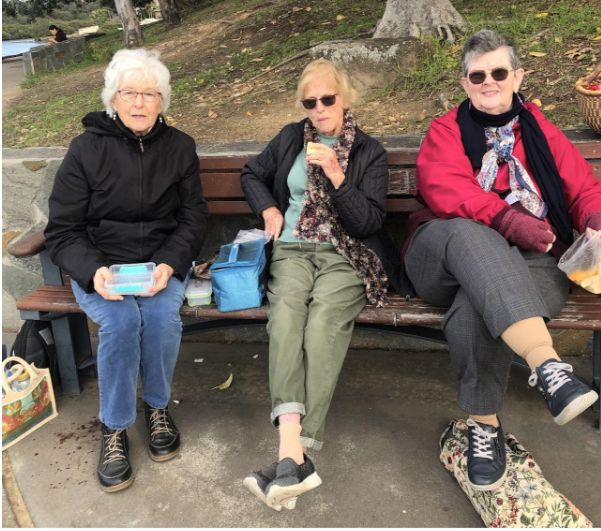
Margaret Mahony, Ros Pitt, Alison Miller, Rita Potente, Carol Reynolds and visitor Kath Kuziak attended suitably attired for the weather. Unfortunately Patricia Meredith was unable to join us.
The colder weather was in our favour as the location is usually much busier. We quickly commandeered a table sheltered from the prevailing westerly wind by the natural landform located in the heart of the grounds and where some sun was peeping through the shade. As always we started out with a hot cuppa and to warm our spirits we read in turn the haiku voted most popular from The Haiku Foundation’s Haiku Dialogue for May on the theme ‘yellow’.
Then it was down to business. After hearing about members recent achievements, Carol provided an update on the multitude of haiku happenings and opportunities currently available for submission. This included how to get further information on the Haiku Down Under 2024 virtual conference being held August 16-18, and encouraging registration which is free and available until 11th August. More information available here.
Our first exercise was hearing some of the recent haiku written by members and the inspiration and transition of their haiku. The second exercise was set to encourage members to open their eyes to the scale of participation in haiku throughout the world – to delve deeper into the many opportunities available on the internet to see, read and learn about haiku and the Japanese poetry genre in general.
One of these ways was to explore The Haiku Foundation’s HaikuLife Film Festival. The exercise was to make a list of five haiku that resonated. It was interesting to hear the variety of haiku choices and the responses to some of the vision.
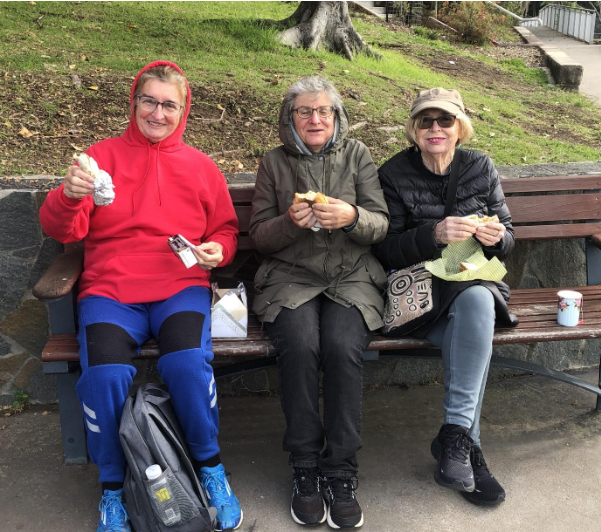
It was a jam-packed meeting and we almost forgot to have our ginko walk. The sun had moved by then so we upped stakes and had a short walk to gather inspiration. We relocated to the sun-drenched benches on the water’s edge to enjoy our prepacked picnic lunches and discuss the findings from our walk. By then the winter chill was starting to seep into our bones so home fires beckoned.
It was agreed by all who attended that Como Pleasure Grounds is an ideal place offering a lot of inspiration for a ginko and we will come again.
confluence offers haiku poets a unique opportunity to showcase a representative selection of their work and to collaborate with other poets. Each issue of the journal will feature 1 to 2 poets and publish a representative sample (at least 15 poems) of the selected poet’s work along with critical commentary by other poets. Selected poets are also invited to participate in collaborative writing activities and be published in an year-end anthology. The editors intend to promote confluence widely in non-haiku poetry circles, so that selected poets may have their work read and appreciated by a more general readership.
Submissions open 15 June, 2024 and will be accepted through 15 July, 2024. confluence is edited by Ryland Shengzhi Li, Antoinette Cheung, and Aidan Castle. To learn more about the journal and to submit, please visit our website.








 Australian Haiku Society