
For the first meeting of Bindii for 2018, Julia Wakefield and Sara Sims prepared a workshop on tanka.
Continue reading “Report on Bindii Japanese Genre Poetry Group meeting: 3 February 2018”
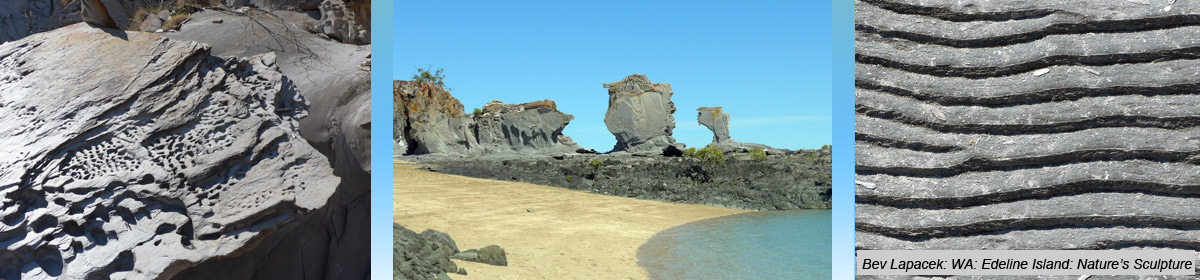
For the first meeting of Bindii for 2018, Julia Wakefield and Sara Sims prepared a workshop on tanka.
Continue reading “Report on Bindii Japanese Genre Poetry Group meeting: 3 February 2018”
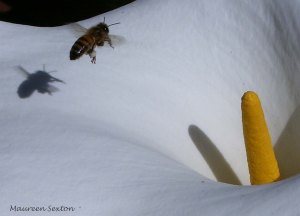 I met the late WA haiku poet, Nicholas Barwell, in 2005 and there began years of discussions about haiku and my first attempts at writing haiku. Following this, I was fortunate to be offered, and to complete, an intense mentorship (writing, researching, critiquing and workshopping of haiku for publication) with mentor, John Bird, in 2007. I am so grateful to both of these people for the excellent grounding they gave me in haiku and the development of my love for haiku.
Since then, and after much research and experience, I have learned that haiku can be so much more than a form of poetry. It can also be a lifestyle, a healing tool, and a tool for environmental activism. Continue reading “The Healing Power of Haiku: Maureen Sexton”
The February 2018 Eucalypt: a tanka journal e-Newsletter is now online. Included are the Scribble Awards from issue 23, Book Notes, items of interest on the web, submission and subscription details and an engaging writing challenge you might like to try.
warm wishes
Julie Thorndyke
Editor, Eucalypt: a tanka journal
Well there goes January in a flash and here we go into February . . .
We have managed to catch a few snippets of last month’s news, and thank you again to all those who have sent items to share with our readers.
Haiku Musings
It is usually of great interest as well as instructional to reflect on what haiku means to others, this is certainly the case here. We continue with our series of thoughtful reflections on haiku with the publication of My Writing Practice by Dawn Bruce and Why Haiku by Lorin Ford.
These are best read in the quiet zone, unhurried and perhaps with a cup of tea. Continue reading “Members’ News January, 2018”
25 January 2018
We were just gathering round our shady table when the darkening clouds began to rumble. So we headed to The Oaks marquee instead, a wise move we agreed, when shortly a rainstorm came drumming down.
As we unpacked our show-and-tell, we remarked on the number of copies of Windfall 6 on the table! Yes, we had all noticed that this issue contains haiku by each one of us – Gregory Piko, Hazel Hall, Kathy Kituai, Marietta McGregor, Glenys Ferguson, Jan Dobb. The chummy tone of the afternoon ‘deepened’. Continue reading “HAIKU @ THE OAKS, CANBERRA”
Why not free verse, sonnets or ghazals? (I‘ve written some). Or bush ballads? (I love horses).
My involvement with haiku started with an unexpected discovery in 2004. Carla Sari read out a haiku by Dhugal Lindsay:
xxxxxxxxxxxxxxxxxxxxpicking up a jellyfish . . .
xxxxxxxxxxxxxxxxxxxxmy lifeline
xxxxxxxxxxxxxxxxxxxxclear and deep
I was immediately transported to my early childhood on the beach at Seaford, holding a moon jellyfish from the shallows (they’re non-stingers) in the palm of my hand, where it became a shining lens. In this first ‘aha moment’ it seemed to me that a haiku could be a lens which, focusing on a detail or two, could evoke an entire scenario and mood, an experience of participation rather than a story told. Continue reading “Why Haiku? : Lorin Ford”
Yarra Haiku Poets is a new regular event to be held every second month in Melbourne and surrounding areas.
The intention is to encourage poets to meet, discuss and share haiku related topics in a social setting.
According to Wikipedia, the Yarra river was a meeting place for indigenous Australians and the name Yarra was a mistranslation of the Wurrundjeri term Yarro-yarro meaning “ever flowing”. This term aptly also represents the diversity, creativity and pleasure we enjoy with our involvement in haiku.
These events are open to any interested individual whether established poet or new to the genre. Continue reading “Yarra Haiku Poets”




 Australian Haiku Society