Fleeting Nature: by Matt Hetherington

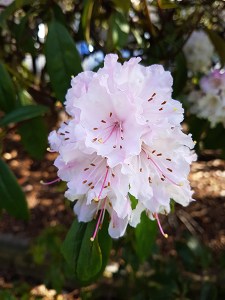
rhodo
photo: Ron Moss

For me, haiku is a way of capturing the fleeting nature of nature. No other poetic form seems suited so well to bringing the delicateness of the world to the page, and to illuminating the way things balance before they fall over or take flight. Or something close to both, as in this one by Issa (maybe my favourite of all haijin), translated by R.H.Blyth:


striking the fly
i hit also
a flowering plantxxxxxxxxxxxx
Continue reading “Fleeting Nature: by Matt Hetherington”

Genjuan International Haibun Contest 2018

The Genjuan Contest office is now open to receive your submissions for 2018. Closing deadline will be 31st of January. The organizers, Hailstone Haiku Circle, greatly value participation from overseas. One of last year’s four judges, Ellis Avery, is retiring in order to study nursing full time back in her native USA, and her place as judge will be taken by Angelee Deodhar of Chandigarh, India. Some of you may know her wonderful series of ‘Journeys’ anthologies, each of which gathers more than 100 haibun works. Nenten Tsubo’uchi’s title has changed to emeritus judge, reflecting the special assistance he gives the final part of the judging process. Hisashi Miyazaki and myself continue in office for another year. The rules remain the same as last year also found on the link below.
How about entering a piece or two? There are real prizes and certificates and it’s free. Address of our officer, Eiko Mori, and other details are given in the Genjuan 2018 Guidelines (reached via Icebox top page – see website).

With best wishes for the autumn (spring, Down Under)!

Stephen Henry Gill (Tito), Kyoto, Japan


Members’ News September, 2017

September has been a highly productive month with a number creative happenings in the world of Australian haiku including the Spring Equinox Haiga Kukai and the exciting news of the formation of a new regional haiku group, White Pebbles, based on the Central Coast of NSW.

Spring Equinox Haiga Kukai

The Australian Haiku Society’s Haiga Kukai has now concluded and we will announce the results when they become available. Please click on the links here to enjoy the entries for both the seasonal and non-seasonal categories. Our sincere thanks to Ron C. Moss for supplying these wonderful images and for his time and consideration in judging the kukai. A warm thanks to all participants for their submissions.

Continue reading “Members’ News September, 2017”

White Pebbles Haiku Group

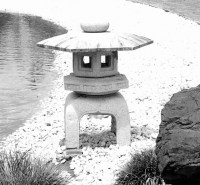
lantern and white pebbles crop The Gosford/Edogawa Japanese Gardens on the Central Coast was the venue for the inaugural meeting of this group on September 23rd. Members travelled from Sydney, Newcastle and various parts of the Coast to attend. We began with a relaxed orientation session on the terrace overlooking the garden while we determined our group name, frequency of meetings and general procedures.

It was unanimously decided that we would meet four times a year, once in each season, and would bring several haiku in response to prompts sent in advance of the meetings. However the main activity would be a ginko to observe and record the changes the seasons brought to this authentically designed garden, with many of its features gifted from Japan.

Continue reading “White Pebbles Haiku Group”

Watersmeet Ginko, 3rd September

Hobart haikuists had planned to meet on the last Sunday of winter for a walk in St David’s Park. The previous night brought bitter weather preceding the State’s coldest August day, with snow at low levels on Kunanyi/Mount Wellington. Rather than face the icy winds we postponed until the following Sunday when we enjoyed a window of sunny calm and the company of two members who had been unable to attend the week before.

St David’s Park is on the site of Hobart’s first cemetery. Buried there are many of the First Fleeters and early settlers. When the cemetery fell into disuse and was made into a place of recreation some of the original headstones were embedded in sandstone walls that form a memorial walk. Stone seats built into the wall are sunny spaces out of the wind. We met near the rotunda and then dispersed to walk silently through the English-style gardens, then came together again in the shelter of the memorial wall. Here we shared our writing and observations, giving comment and feedback to each other before adjourning to a nearby café in Salamanca Place for coffee and further conversation.

bench
photo and haiku : Andrew Reeves

bench in the sun
the company
of camellia blossom
Continue reading “Watersmeet Ginko, 3rd September”

Call for Submissions: AHS Spring Haiga Kukai: Seasonal

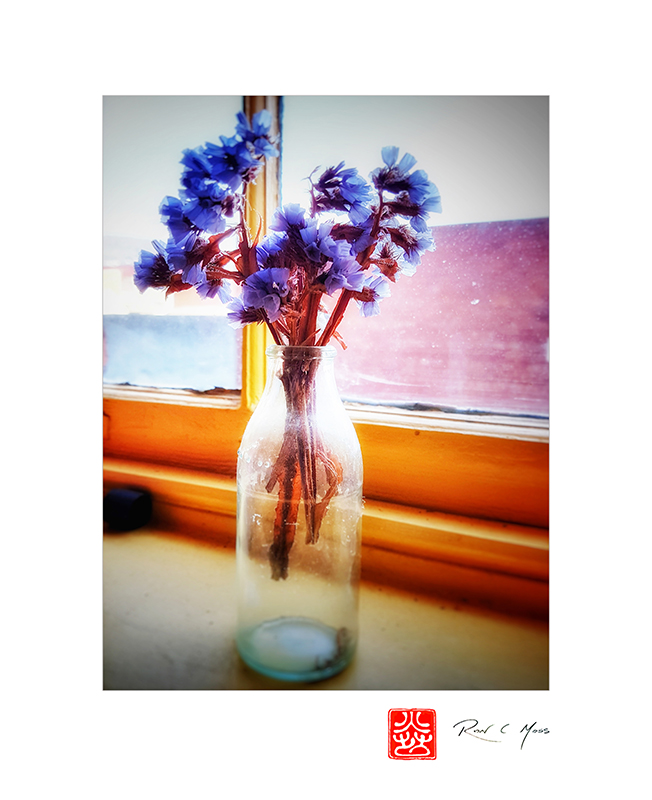
in purple

The Spring Australian Haiku Society Haiga Kukai is now open for entries. We would like to invite poets to send one haiku per image until 29th September. The winning haiku will be displayed on the AHS website.

Please note that if more than one haiku per image is submitted by any individual, only the first haiku sent will be considered.
Submissions will only be accepted if entered in the comments section.

By entering the competition, entrants agree to make their haiku available for use on the AHS website, although the copyright will remain with the author.
No correspondence will be entered into regarding winning entries.

Good luck!

To enter, select the post title (or click here) and enter your haiku in the comment box below the post. Please scroll to the bottom of the page.

Please make sure that your name appears on your entry as you would like to see it on the website.

Call for Submissions: AHS Spring Haiga Kukai: Non-Seasonal

capture

The Spring Australian Haiku Society Haiga Kukai is now open for entries. We would like to invite poets to send one haiku per image until 29th September. The winning haiku will be displayed on the AHS website.

Please note that if more than one haiku per image is submitted by any individual, only the first haiku sent will be considered.
Submissions will only be accepted if entered in the comments section.

By entering the competition, entrants agree to make their haiku available for use on the AHS website, although the copyright will remain with the author.
No correspondence will be entered into regarding winning entries.

Good luck!

To enter, select the post title (or click here) and enter your haiku in the comment box below the post. Please scroll to the bottom of the page.

Please make sure that your name appears on your entry as you would like to see it on the website.


What Haiku Means to Me: by Vanessa Proctor

Haiku brings me joy. It brings me joy when I experience a moment of inspiration and it brings me joy when I am able to translate that moment into poetry. Writing haiku encourages us to be present, to look, really look at the world in which we live to see things with a fresh perspective. When we stop and take time to observe, we experience our surroundings fully with all our senses. We truly live in the moment.

I enjoy trying to capture in words the unique and distinctly Australian character of my local area, noticing the changes in seasons, the plants, birds and animals. I also enjoy thinking about how people interact with each other and with their landscape. Filling my notebook with poems gives me great satisfaction. There is a sense of solitary joy, but joy also comes from reading the work of others, especially when I read a brilliant haiku and it continues to resonate with me in what Wordsworth described as ‘that inward eye’.

Continue reading “What Haiku Means to Me: by Vanessa Proctor”